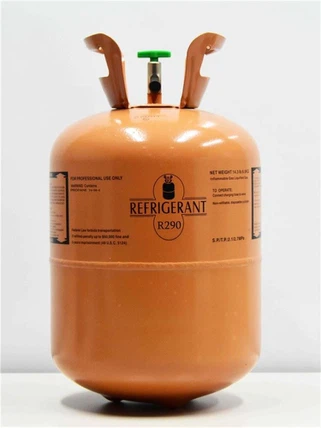


Xiamen Juda Chemical & Equipment Co., Ltd. is one of the leading manufacturers and suppliers of R32 Difluoromethane (CH₂F₂) as Dry Etching Gas for Semiconductor Applications in China. If you are looking for R32 Difluoromethane (CH₂F₂) as Dry Etching Gas for Semiconductor Applications, please be free to buy our quality products at competitive price from our factory. Contact us for quotation.
Why R32 Is Used in Dry Etching Processes
Dry etching is a critical process in modern semiconductor manufacturing, enabling precise material removal for advanced device structures. Among various fluorine-based etching gases, R32 Difluoromethane (CH₂F₂) is widely used as a dry etching gas for Si₃N₄ and related materials in plasma-based processes.
For process engineers, device manufacturers, and B2B procurement teams, understanding why R32 is selected, how it works in plasma etching, and what specifications matter when sourcing electronic-grade R32 is essential for stable production and yield control.
This article provides a clear technical overview of R32 as a dry etching gas, including its etching mechanism, advantages, application scenarios, safety considerations, and supply specifications.
What Is R32 Difluoromethane (CH₂F₂)? Tel:+86-592-5803997
R32 (Difluoromethane) is a fluorinated hydrocarbon commonly used in refrigeration, but it is also an important electronic specialty gas for plasma etching applications.
Basic Chemical Information
| Property | Description |
|---|---|
| Chemical name | Difluoromethane |
| Refrigerant name | R32 / HFC-32 |
| Molecular formula | CH₂F₂ |
| CAS number | 75-10-5 |
| Molecular weight | 52.02 |
| ODP | 0 |
| GWP | ~675 |
| Physical state | Colorless gas |
R32's fluorine content and molecular structure make it suitable for controlled fluorine radical generation under plasma conditions, which is critical for precise dry etching.

What Is Dry Etching in Semiconductor Manufacturing?
Dry etching is a material removal process that uses plasma or reactive gases to etch thin films with high precision and anisotropy. Compared with wet etching, dry etching offers:
Better critical dimension (CD) control
Improved pattern fidelity
Compatibility with advanced node manufacturing
Common dry etching methods include:
Plasma etching
Reactive Ion Etching (RIE)
Inductively Coupled Plasma (ICP) etching
Fluorine-based gases like R32, SF₆, and C₄F₈ are widely used due to their strong chemical reactivity with silicon-based materials.
Etching Mechanism of R32 in Plasma Processes
Under plasma conditions, R32 (CH₂F₂) dissociates to generate active fluorine radicals (F·) and other reactive species.
Key Etching Functions of R32
Fluorine radicals react with silicon-containing materials to form volatile byproducts
Enables effective etching of Si₃N₄ (silicon nitride)
Provides controlled etch rates suitable for fine patterning
Compared with higher-fluorine gases, R32 allows more controllable etching behavior, making it useful in applications where selectivity and profile control are important.
Why R32 Is Used for Si₃N₄ Dry Etching
R32 is commonly selected for Si₃N₄ plasma etching due to the following advantages:
1. Controlled Etch Rate
R32 provides a moderate fluorine density, allowing better control over etch speed and uniformity.
2. Good Process Stability
Its decomposition behavior in plasma supports stable etching conditions, especially in combination with other process gases.
3. Compatibility with Gas Mixtures
R32 is often used together with other gases to fine-tune:
Etch selectivity
Sidewall profile
Surface roughness
4. Environment Considerations
With ODP = 0 and relatively lower GWP compared with some alternative fluorinated gases, R32 is increasingly accepted in environmentally conscious manufacturing processes.
Comparison with Other Common Etching Gases
| Gas | Main Application | Etching Behavior | Selectivity | Environmental Profile |
|---|---|---|---|---|
| R32 (CH₂F₂) | Si₃N₄ etching | Controlled, moderate | Medium | ODP 0, lower GWP |
| SF₆ | Si, SiO₂ | Very aggressive | High | Very high GWP |
| C₄F₈ | Profile control | Polymer formation | High | Higher GWP |
| CF₄ | General fluorine source | Stable but slower | Medium | High GWP |
This comparison helps process engineers choose the appropriate gas based on etch performance, selectivity, and sustainability goals.
Frequently Asked Questions (FAQ)
Q1:Is R32 suitable for etching materials other than Si₃N₄?
A1:R32 is primarily used for Si₃N₄ etching but can be applied in mixed-gas processes for other silicon-based materials depending on process design.
Q2:What purity level of R32 is required for semiconductor manufacturing?
A2:Electronic-grade purity (99.9% or higher) is typically required to ensure process stability and device yield.
Q3:Can R32 replace SF₆ in dry etching?
A3:R32 is not a direct replacement in all cases but is often used as part of optimized gas mixtures to reduce environmental impact while maintaining performance.
Factory Tour Tel:+86-592-5803997


Our Advantages Tel:+86-592-5803997
1
20YEARS EXPERIENCE IN FLUORINE CHEMICAL AND EUIQPMENT EXPORT
2
QUICK RESPONSE, ANY INQUIRIES WILL BE REPLIED WITHIN 12 HOURS
3
SUPERIOR QUALITY CONTROL WITH UL,CE,ISO,CCC CERTIFCATION
4
REASONABLE & COMPETIVE FACTORY PRICE
Company Profile Tel:+86-592-5803997

Need Technical Support or Bulk Supply?
If you are sourcing electronic-grade R32 dry etching gas for semiconductor manufacturing, we can provide:
Detailed technical specifications
SDS and safety documentation
Customized purity and packaging solutions
Stable bulk supply for production lines
Contact us today to discuss your process requirements.
Hot Tags: R32 Difluoromethane (CH₂F₂) as Dry Etching Gas for Semiconductor Applications, suppliers, manufacturers, factory, quotation, price, buy