



Aerosol propellants
Your Professional Aerosol propellants Manufacturer In China
What Is Aerosol propellants?
Aerosol propellants are the driving force behind any spray product, responsible for delivering the contents of an aerosol can in a fine, controlled mist or stream. These propellants are typically gases stored under pressure which, when released, carry the active ingredients out of the container.
In pharmaceutical inhalers, the aerosol propellant is not merely a "spray power source"; it is a crucial component of the drug formulation and must meet extremely high requirements for safety, efficacy, stability, and compatibility.
Core Functions
The primary functions of the propellant in an inhaler are:
Nebulizing the drug: Dispersing drug solutions or suspensions into appropriately sized (typically 1-5 micrometers) aerosol particles, allowing them to deposit deep within the lungs.
Providing propulsion: Providing sufficient pressure to expel the drug from the device.
Serving as a solvent or carrier: In many formulations, the propellant itself is a solvent or suspension medium for the drug.
What is HFA 134a propellant?
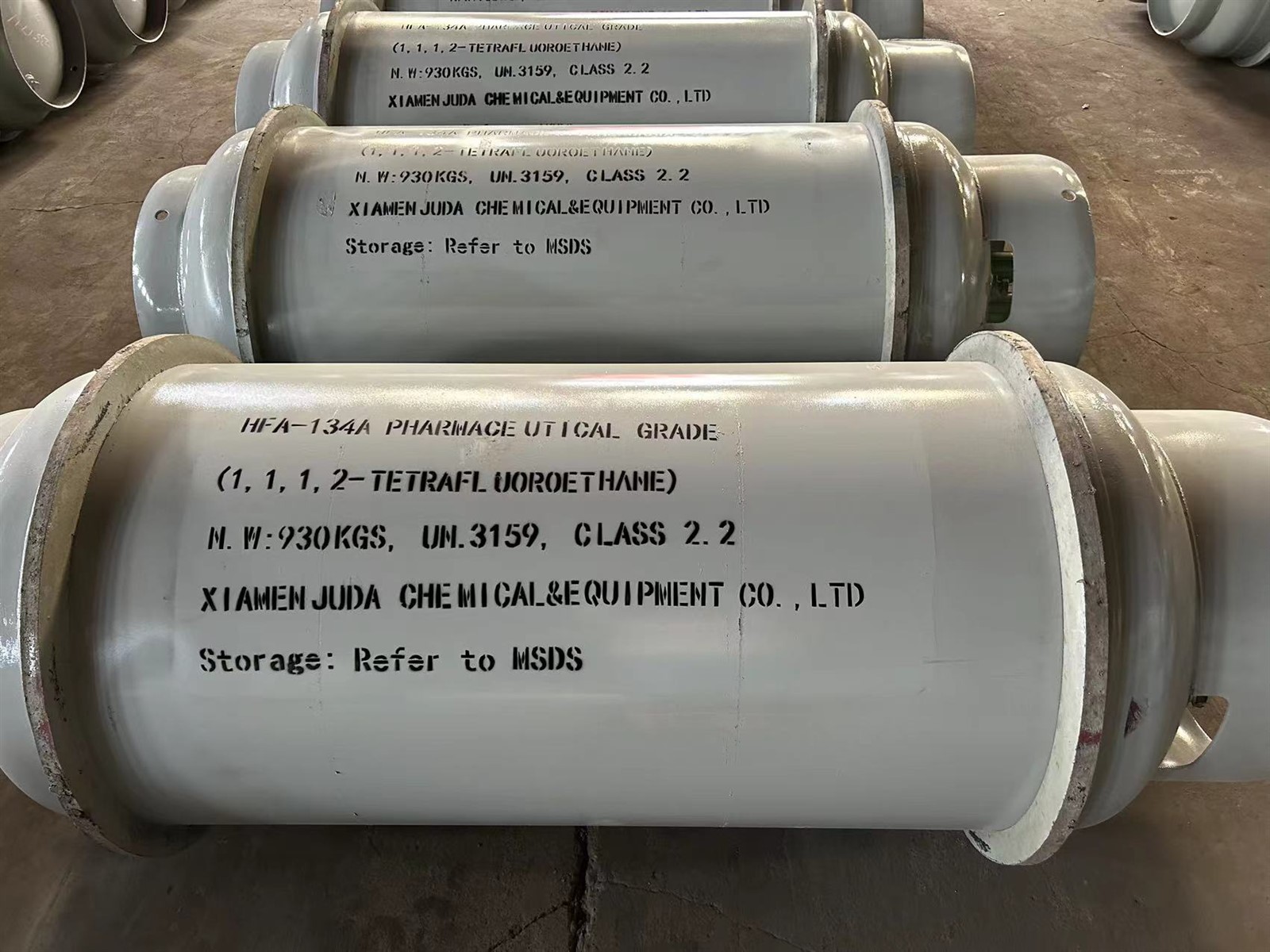
HFA 134a, also known as 1,1,1,2-Tetrafluoroethane and Norflurane, is a hydrofluoroalkane (HFA) propellant widely used in pressurized metered-dose inhalers (pMDIs) for respiratory drug delivery. Following the phase-out of ozone-depleting chlorofluorocarbon (CFC) propellants under the Montreal Protocol, HFA 134a emerged as a safe and effective alternative.
The characteristics of HFA 134a propellant:
Appearance: Boiling point is about -26.3 ℃, with moderate vapor pressure, and it could be liquefied easily for the storage;
Chemically Inert: Having certain level of chemical inertness to most Active Pharmaceutical Ingredients (APIs) can prevent API degradation even during long term storage;
Safe and well tolerated: HFA 134a propellant has a fast elimination, with no evidence of accumulation in the body;
Ozone-friendly: ODP 0.
HFA 134a Propellant
High Purity:99.99%


What is HFA 152a propellant?
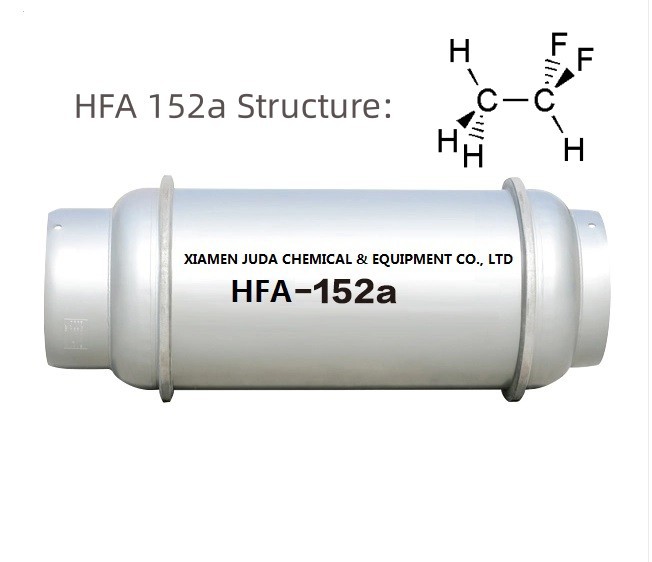
HFA 152a (1,1-Difluoroethane) is an advanced low GWP propellant engineered to meet the evolving demands of industries seeking effective, environmentally conscious solutions.
As the leading low GWP aerosol propellant alternative to HFA-134a and HFA-227ea, it offers pharmaceutical OEMs and formulation scientists a strategic pathway to sustainable, future-compliant Metered-Dose Inhaler (pMDI) platforms. With a Global Warming Potential (GWP) of 124-over 90% lower than legacy options-this HFA 152a medical propellant directly addresses the economic and compliance pressures of global phasedown schedules like the Kigali Amendment.
The characteristics of HFA 152a propellant:
Appearance: Boiling point is about -23.8℃;
Safe and well tolerated: HFA 152a propellant has a fast elimination, with no evidence of accumulation in the body;
Ozone-friendly: ODP 0
Reduces the carbon footprint of MDIs by 90%
Low GWP, HFA 152a GWP:124
HFA 152a Propellant
High Purity:99.99%


HFA 134a Specification
| CAS Number: |
811-97-2 |
| EC Number: | 212-377-0 |
| Molecular Formula: | C2H2F4 |
| Structural Formula: | CF3CH2F |
| Molecular weight(g/mol): | 102.3 |
| Appearance: | Clear, colorless liquid and vapor |
| Critical pressure: | 4.067 MPa |
| boiling point: | -26.3°C |
| Density: | 1.206g/cm3 |
| Density of liquid (25 ): | 1.207 g/cm3 |
| Solubility in water (25): | 0.15 W% |
| UN No: | 3159 |
| Boiling point/boiling range : | Boiling point/boiling range -26.1 °C (-15.0 °F) at 1,013 hPa |
| Flash point : | Non flammable |
| Evaporation rate : | > 1 (CCL4=1.0) |
| Latent heat of evaporation in boiling point: | 215.0KJ/kg |
| ODP: | 0 |
| Other names |
Freon 134a Dymel 134a Forane 134a Genetron 134a HFA-134a HFC-134a R-134a Suva 134a Norflurane 1,1,1,2-Tetrafluoroethane |
HFA 152a Specification
| CAS Number: | 75-37-6 |
| EC Number: | 200-866-1 |
| Molecular Formula: | C2H4F2 |
| Structural Formula: | CH3CHF2 |
| Molecular weight(g/mol): | 66.05 |
| Appearance: | Clear, colorless liquid and vapor |
| boiling point: | -23.8°C |
| Density: | 0.91 |
| UN No: | 1030 |
| Boiling point/boiling range : | Boiling point/boiling range -26.1 °C (-15.0 °F) at 1,013 hPa |
| Flash point : | Flammable |
| ODP: | 0 |
| Other names |
Freon 152a HFA-152a HFC-152a R-152a Propellant 152a Dymel 152A 1,1-Difluoroethane Difluoroethane 1,1-difluoro DFE Ethane Ethylidene difluoride Ethylidene fluoride |
HFA 134a Propellant: Advantages And Disadvantages
Advantages:
1. Environmentally friendly: HFA 134a propellant is widely recognized for its low environmental impact, serving as a sustainable alternative to conventional chlorofluorocarbon (CFC) propellants. CFC-based propellants have been largely phased out worldwide due to their harmful effects. Environmentally conscious businesses seeking to integrate greener solutions into their offerings will find HFA-134a propellant a responsible and forward‑thinking choice.
2. Safe and non-toxic: Our HFA-134a propellant is non-toxic and highly safe, making it suitable for a broad spectrum of applications. It presents no significant health risks to end-users, thereby serving as a reliable option for sensitive industries such as pharmaceuticals and cosmetics.
3. Efficient and reliable: HFA 134a propellant is an efficient and reliable solution, consistently delivering optimal performance across diverse applications. Rigorously tested in varied environments and conditions, it ensures stable and predictable results. For merchants committed to product quality and consistency, HFA-134a offers a trusted foundation for high‑standard formulations.
4. Cost-effective: HFA134a propellant delivers exceptional cost-efficiency, offering merchants outstanding value without compromising on quality. As a wholesale manufacturer, we are dedicated to supplying this reliable solution at highly competitive prices, empowering our clients to enhance profitability while consistently meeting stringent quality standards.
Limitations:
1.Environmental Impact
• High Global Warming Potential (GWP): Rated at approximately 1300, indicating significant greenhouse gas impact.
• Lifecycle Emissions: Primary emissions occur during the use phase through spray release; uncontrolled leakage contributes directly to atmospheric warming.
2.Technical & User Experience Challenges
• Electrostatic Buildup: High-speed spraying may generate static electricity, potentially causing discomfort during initial patient use.
• Formulation & Delivery Control: Requires precise particle engineering in suspension or solution systems to ensure dosage uniformity. Critical parameters include particle size control (MMD, MMAD) and optimization for valve shear conditions.
3.Supply Chain & Market Factors
• Concentrated Supplier Power: Limited availability of pharmaceutical-grade purification capacity creates a supplier-concentrated market.
• Price Volatility: Costs are susceptible to fluctuations in supply, geopolitical factors, and shifts in the upstream hydrofluoric acid industry.
HFA 152a Propellant: Advantages And Disadvantages
Advantages:
1. Very Low Global Warming Potential (GWP): This is its standout feature. HFA 152a has a GWP of 124 (over 100 years), which is approximately ~6 times lower than HFA 134a (GWP 1430) and dramatically lower than older CFCs. This makes it one of the most climate-friendly propellant options available for MDIs.
2. Effective Drug Delivery: HFA 152a can produce aerosols with particle sizes suitable for deep lung deposition (respirable fraction). HFA 152a is compatible with a range of suspension and solution formulations, allowing for stable drug products.
3. Regulatory & Strategic Advantage: As global regulations (like the EU F-Gas regulation and Kigali Amendment) increasingly phase down high-GWP HFAs, HFA 152a offers a future-proof solution for pharmaceutical companies.
It allows companies to differentiate their products with a "lower carbon footprint" label, which is becoming important for sustainability-conscious healthcare systems.
Limitations:
1.Flammability (The Primary Challenge):In its pure form, HFA 152a is flammable. While MDIs are engineered to keep the headspace concentration below the flammable limit, this requires careful formulation, manufacturing controls, and specific canister/valve designs. This complexity was a major initial barrier to its adoption.
2.Formulation & Compatibility Complexity:Its solvent properties differ from HFA 134a and HFA 227e. This often requires reformulating the drug product from the ground up—finding new stabilizers, surfactants, and excipients that are compatible. This is a costly and time-consuming process.
3.Higher Production Cost (Initially):The need for specialized manufacturing equipment to handle flammability, coupled with lower production volumes compared to the established HFA 134a, has historically made HFA 152a more expensive.
Applications of HFA 134a Propellant
Respiratory Metered-Dose Inhaler (PMDI)
A Contact for help • Short-acting β2-agonist (SABA);
Maintenance Therapy: ICS, ICS+LABA Combination, LABA+LAMA, Triple Combination PHAIII-IVAL-like (ICS + LABA + LAMA) well-sprayed; HFA 134a Propellant brings desired spray droplet size distribution(MMAD is 1–5 μm typically), penetrates tiny and medium airways with ease.
Skin And Nasal Topical Aerosol
Anti-inflammatory, Analgesic and Skin Barrier Repair Spray (Inert propellant to reduce irritation from excipients);
Nasal topicals in microvolume applications, with formulation limits are the following;
Veterinary Inhalation And Topical Preparations
Adjunctive treatment for pet asthma/bronchitis, suitable for spillover from human formulations.
Process And Formulation Technology Iteration Platform
Microsuspension and ultrafine particle engineering to improve lung deposition efficiency and reduce dose.
The Role Of A "Bridge Propellant" In The Transition Period
Supporting treatment continuity before low-GWP solutions are fully commercialized, preventing patient compliance losses due to formulation switching.
HFA 134A VS R134A
As chemically equivalent 1,1,1,2‑tetrafluoroethane, the designations “R134a” and “HFA‑134a propellant” distinguish differing purity and application grades. “R134a” typically refers to refrigeration and automotive air‑conditioning grades, while “HFA‑134a propellant” denotes pharmaceutical‑grade material that meets stringent quality and regulatory standards for use in medical inhalers and aerosol drug products.
| Feature | HFA-134a (Pharmaceutical Grade) | R-134a (Refrigeration Grade) |
|---|---|---|
| Chemical Name | 1,1,1,2-Tetrafluoroethane | 1,1,1,2-Tetrafluoroethane |
| Core Distinction | Grade & Intended Use: Defined by its purity and regulatory compliance for human health. | Grade & Intended Use: Defined by its performance and compatibility within mechanical systems. |
| Primary Application | Pressurized Metered-Dose Inhalers (pMDIs) for asthma, COPD, and other respiratory drugs. | Refrigerant for automotive air conditioning, domestic refrigeration, and commercial cooling systems. |
| Purity Standards | Extremely high. Must comply with pharmacopoeial standards (e.g., USP, EP, JP) for impurities, including water, non-volatile residues, and other organics. | Industrial grade. Meets industry specifications (e.g., AHRI 700) focused on stability and performance within refrigeration circuits. |
| Regulatory Framework | Stringently regulated as a Drug Component by health authorities (FDA, EMA, etc.). Requires full Regulatory Support Files (RSF) and Drug Master Files (DMF). | Regulated as an Industrial Chemical / Refrigerant by environmental and safety agencies (EPA, REACH, etc.). Governed by regulations like the U.S. EPA SNAP program and F-Gas regulations. |
| Key Quality Focus | Patient Safety: Purity, consistency, and toxicological profile are critical to ensure no adverse effects when inhaled. | System Performance & Longevity: Chemical stability, lubricant compatibility, and efficient heat transfer. |
| Packaging & Handling | Packaged in dedicated, cleaned, and validated containers. Requires full traceability (batch number, COA). Handled in GMP-controlled environments. | Packaged in standard refrigerant cylinders or cans. Traceability is typically for supply chain and safety (e.g., DOT regulations). |
| Supply Chain | Limited, qualified suppliers. Subject to rigorous audit by pharmaceutical companies. Higher cost due to specialized production and QA. | Broad, competitive supplier base. Price driven by commodity refrigerant market dynamics and environmental regulations. |
| Environmental Impact (GWP) | Identical High Global Warming Potential (~1430). Both are HFCs facing phase-down pressures under regulations like the EU F-Gas Regulation. |
Handling And Storage

Handling
High-pressure gas. Do not puncture or incinerate the container. Ensure all equipment is rated for cylinder pressure. Close the valve after each use and when the cylinder is empty. Protect cylinders from physical damage: avoid dragging, rolling, sliding, or dropping. Use an appropriate hand truck for transporting cylinders.

Storage
Store cylinders upright with the valve protection cap securely in place, and ensure they are properly restrained to prevent tipping or falling. Do not expose cylinders to temperatures exceeding 52 °C (125 °F).
First Aid Measure
Eye Contact
Flush the eyes immediately and thoroughly with a gentle stream of clean water for a minimum of 10 minutes. While rinsing, gently lift and open the upper and lower eyelids to ensure all surfaces are washed. Remove any contact lenses, if present and easily removable, during the rinsing process. Seek medical attention promptly if irritation, pain, or redness persists or develops.


Inhalation
Immediately move the affected person to fresh air. Keep them at rest in a comfortable position that aids breathing.
If breathing has stopped, is irregular, or if respiratory arrest occurs: Provide artificial respiration or supplemental oxygen. Note: This should only be performed by trained individuals, as performing mouth-to-mouth resuscitation can pose a risk to the rescuer.
If unconscious: Place the person in the recovery position. Ensure the airway is clear and maintain it in an open position. Loosen any tight clothing (e.g., collar, tie, belt, waistband). Seek immediate medical attention. In all cases: If adverse symptoms persist or are severe, obtain medical attention promptly.
Ingestion
Immediately move the individual to an area with fresh air and allow them to rest in a position that supports comfortable breathing. Ensure the airway remains open and loosen any constrictive clothing, such as a collar, tie, belt, or waistband.
Do not give anything by mouth to an unconscious person. If the person is unconscious, place them in the recovery position and seek immediate medical attention.
Ingestion of this liquid may cause frostbite-like burns to the mouth and digestive tract. If signs of frostbite are present, or if any adverse symptoms persist or are severe, obtain medical help promptly.
Important note: Because this product rapidly vaporizes upon release, also refer to the Inhalation section for related first aid instructions.

-
![HFA-134a Propellant]() HFA-134a PropellantRead More
HFA-134a PropellantRead MoreFor a HFA-134a Propellant inquiry, provide the required product designation, grade or model, intended application and operating conditions, quantity, packaging, destination market and required
-
![Pharmaceutical Grade HFA 152a: The Future of Medical Grade Propellants]() Pharmaceutical Grade HFA 152a: The Future of Medical Grad...Read More
Pharmaceutical Grade HFA 152a: The Future of Medical Grad...Read MoreHFA 152A is a low-carbon propellant alternative to HFA 134A and HFA 227EA. HFA 152A has a significantly lower environmental GWP than HFA 134A or HFA 227EA. HFA 134A has a GWP (100-year time horizon
-
![Medicinal Aerosols Propellant Norflurane HFA 134a]() Medicinal Aerosols Propellant Norflurane HFA 134aRead More
Medicinal Aerosols Propellant Norflurane HFA 134aRead MoreKey properties of norflurane HFA 134a:. Chemical formula: CF₃CH₂F. Molecular weight: 102.03 g/mol. Boiling point: -26.3 degrees (-15.3 degrees F). Density: 1.21 g/cm³ (at 25 degrees). Ozone Depletion
-
![1,1,1,2-Tetrafluoroethane (HFA-134a) Propellant]() 1,1,1,2-Tetrafluoroethane (HFA-134a) PropellantRead More
1,1,1,2-Tetrafluoroethane (HFA-134a) PropellantRead MoreFor a 1,1,1,2-Tetrafluoroethane (HFA-134a) Propellant inquiry, provide the required product designation, grade or model, intended application and operating conditions, quantity, packaging,
-
![HFA-152a: a Low-GWP Hydrofluoroalkane Propellant]() HFA-152a: a Low-GWP Hydrofluoroalkane PropellantRead More
HFA-152a: a Low-GWP Hydrofluoroalkane PropellantRead MoreHFA 152A is a propellant gas used in medical aerosols. It plays a key role in the medical field, ensuring that medication can be administered precisely and effectively to the patient's respiratory
-
![HFA 152A Propellant Gas]() HFA 152A Propellant GasRead More
HFA 152A Propellant GasRead MoreFor a HFA 152A Propellant Gas inquiry, provide the required product designation, grade or model, intended application and operating conditions, quantity, packaging, destination market and required
-
![HFA-134a Propellant]() HFA-134a PropellantRead More
HFA-134a PropellantRead MoreFor a HFA-134a Propellant inquiry, provide the required product designation, grade or model, intended application and operating conditions, quantity, packaging, destination market and required
-
![Norflurane HFA 134a Propellant Pharmaceutical Aerosols]() Norflurane HFA 134a Propellant Pharmaceutical AerosolsRead More
Norflurane HFA 134a Propellant Pharmaceutical AerosolsRead MoreNorflurane, also known as HFA 134a (1,1,1,2-Tetrafluoroethane), is a widely used propellant in various industries, particularly in the pharmaceutical and medical sectors.
-
![Aerosol Can Propellant Tetrafluoroethane 134a]() Aerosol Can Propellant Tetrafluoroethane 134aRead More
Aerosol Can Propellant Tetrafluoroethane 134aRead MoreFor a Aerosol Can Propellant Tetrafluoroethane 134a inquiry, provide the required product designation, grade or model, intended application and operating conditions, quantity, packaging, destination
-
![HFA-152a Propellant]() HFA-152a PropellantRead More
HFA-152a PropellantRead MoreFor a HFA-152a Propellant inquiry, provide the required product designation, grade or model, intended application and operating conditions, quantity, packaging, destination market and required
-
![HFA134A Pharmaceutical Aerosols]() HFA134A Pharmaceutical AerosolsRead More
HFA134A Pharmaceutical AerosolsRead More*Advantages:99.99% purity. Pharma grade. DMF acknowledged. ISO and OHSAS certified. Already exported to USA, EU, Southeast Asia, Latin America,etc..
-
![HFA-134a Propellant]() HFA-134a PropellantRead More
HFA-134a PropellantRead MoreFor a HFA-134a Propellant inquiry, provide the required product designation, grade or model, intended application and operating conditions, quantity, packaging, destination market and required


With wide experience and expertise, Xiamen Juda Chemical & Equipment Co., Ltd. is one of the leading aerosol propellants suppliers and manufacturers in China. All of our aerosol propellants products have the integrated certificates of ISO quality, safety and environment. Welcome to buy our quality products at competitive price from our factory. For quotation, contact us now.
Propellant Gas, HFA Propellant R134a