
1. According to the evaporation temperature ts of refrigerants under standard atmospheric pressure (100kPa) conditions, they can be divided into: high-temperature refrigerants, medium-temperature refrigerants, and low-temperature refrigerants.
1) Low-temperature refrigerants, such as R113, R114, and R21, are often used in air conditioning systems of centrifugal refrigerators.
2) Medium-temperature refrigerants, such as R22, R717, R142, and R502, are commonly used in ordinary single-stage compression and two-stage compression piston refrigeration compressors.
3) High-temperature refrigerants, such as R503, alkanes, and olefins, are often used in the low-temperature stage of cascade refrigeration devices.
2. According to different chemical compositions, refrigerants can be divided into the following categories: inorganic compounds, halides of saturated hydrocarbons, hydrocarbons, azeotropic refrigerants, and non-azeotropic refrigerants.
1) Inorganic compounds
2) Halides of saturated hydrocarbons (including chlorine-containing compounds such as perchlorofluorocarbons and hydrochlorofluorocarbons)
3) Hydrocarbons
4) Azeotropic refrigerant
5) Non-azeotropic refrigerant
Non-azeotropic refrigerants stipulate that the first number after R is 4, and the subsequent two digits are numbered in the order of discovery, such as R400, R401, R407A, R407B, R407C, etc. Mixed refrigerants have the same components but different proportions, and are distinguished by numbers followed by letters.
Tips: In order to distinguish the degree of damage of refrigerants to the atmospheric ozone layer, R is often replaced by CFC, HCFC, HFC, and HC respectively.
CFC - perchlorofluorocarbon, contains chlorine, fluorine and no hydrogen. It has a destructive effect on the ozone layer. Our country has completely banned the production and use except for special purposes.
HCFC - Hydrochlorofluorocarbon, containing chlorine, fluorine and hydrogen, has a destructive effect on the ozone layer. As a substitute for CFC, it is being phased out at an accelerated pace.
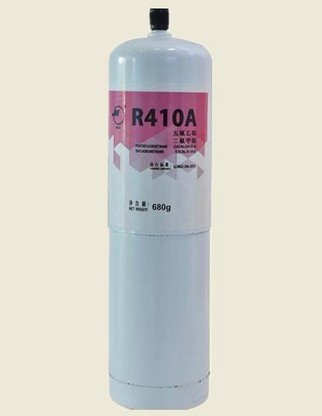
HFC - hydrofluorocarbon, does not contain chlorine or fluorine, has no destructive effect on the ozone layer, but has a high greenhouse gas potential. According to the Kigali Amendment to the Montreal Protocol, the elimination process is beginning.(Common HFC refrigerants include: R134a refrigerant gas, R410a refrigerant gas, R404a refrigerant gas,etc.)
HC - hydrocarbon, contains no chlorine or fluorine, has no destructive effect on the ozone layer, and has low greenhouse gas potential.