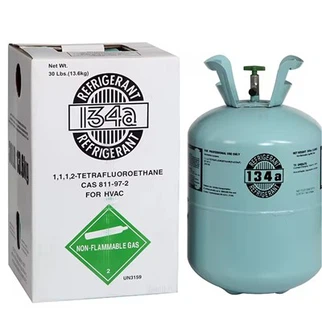

The HVAC-R industry is at a pivotal moment. With the global phasedown of high-GWP (Global Warming Potential) hydrofluorocarbons (HFCs) in full swing, driven by regulations like the AIM Act in the USA and the F-Gas Regulation in Europe, the search for sustainable, efficient, and safe alternatives has never been more critical. For years, R410A has been the workhorse refrigerant for residential and commercial air conditioning systems. However, with its high GWP of 2088, the time for a transition is now.
Enter Refrigerant R454B – a next-generation, mildly flammable (A2L) refrigerant engineered to be the premier, long-term solution for replacing R410A. As a trusted refrigerant supplier, we are at the forefront of this transition, providing high-purity R454B refrigerant to equip the industry for a sustainable future.
If you are an OEM, contractor, or building owner looking for a future-proof path forward, understanding R454B is essential. This article delves into why refrigerant R454B is positioned as the leading choice to replace R410A gas.
Why the Urgent Need to Replace R410A?

R410A, an HFC blend, was itself a replacement for ozone-depleting R22. While it has zero Ozone Depletion Potential (ODP), its exceptionally high GWP has made it a primary target for global phasedowns. The Kigali Amendment to the Montreal Protocol solidifies this international commitment. For businesses and homeowners, this translates to:
Regulatory Compliance: New equipment using high-GWP refrigerants like R410A is being restricted or phased out.
Environmental Responsibility: Reducing the carbon footprint of cooling systems is a corporate and social imperative.
Economic Factors: With production allowances decreasing, the cost and availability of R410A are becoming less predictable.
The industry needed a drop-in solution that balanced performance, safety, and environmental metrics. R454B refrigerant emerges as that solution.
What is Refrigerant R454B? Key Properties and Benefits

R454B is a hydrofluoroolefin (HFO)-based blend classified as an A2L refrigerant, meaning it has lower toxicity and lower flammability. Its composition gives it a remarkably low GWP of 466, which is approximately 78% lower than that of R410A. This single attribute makes it fully compliant with current and upcoming environmental regulations.
But the benefits of R454B extend far beyond just a low GWP number:
Excellent Performance Characteristics: R454B is designed to closely match the operating pressures and capacity of R410A. This results in high energy efficiency, often comparable to or even slightly better than R410A in many systems. This means end-users can achieve their sustainability goals without sacrificing cooling performance or seeing a significant spike in energy bills.
A Near Drop-In Replacement for New Equipment: For Original Equipment Manufacturers (OEMs), R454B is the refrigerant of choice for new, purpose-built systems. Its properties allow for minimal redesign of compressors and heat exchangers, facilitating a smoother transition from R410A platforms. Major equipment manufacturers are already launching new product lines specifically designed for R454B and other A2L alternatives.
Facilitates a Smooth Transition: The similarity in operating characteristics also makes R454B a strong candidate for retrofitting existing R410A equipment, though this must be done by certified professionals following OEM guidelines. This "retrofit" potential is crucial for the vast installed base of R410A systems, extending their life in an environmentally friendly way.
R454B vs. R410A: A Direct Comparison
| Property | R410A | R454B | Implication |
|---|---|---|---|
| Classification | A1 (Non-flammable) | A2L (Mildly Flammable) | Requires new safety protocols for R454B |
| GWP | 2088 | 466 | R454B has a 78% lower climate impact |
| Operating Pressure | High | Very Similar | System performance and capacity are maintained |
| Efficiency | High | Comparable/Slightly Better | No loss of energy performance with R454B |
Addressing The A2L Flammability Of R454B
The "L" in A2L stands for "lower flammability." It is crucial to understand that R454B is not flammable in the same way as hydrocarbons like propane. Its burning velocity is very slow, and it has a high minimum ignition energy, meaning it is significantly safer to handle than category 3 (A3) refrigerants.
application areas and advantages of r454B
R454b is widely used in various occasions due to its excellent performance:
Marine air conditioning system: designed for ships in marine environments, providing efficient temperature regulation and humidity control functions.
Commercial air conditioning system: in large shopping malls, office buildings and other places, r454b can ensure the comfort of the indoor environment while reducing energy consumption.
Industrial cooling systems: in industries such as chemical and pharmaceuticals, r454b can be used to maintain specific production conditions and ensure product quality.
The Market Prospect of R454B Refrigerant
Current Market Situation
The R454B market is seeing a sharp rise in demand and supply, driven by the global phase - out of high - GWP refrigerants like R410A. Demand is especially strong in regions with strict environmental rules, such as the US and EU.
In the US, EPA approval of R454B for new AC equipment has spurred demand from manufacturers, who are integrating it into new product lines. In the EU, F - Gas Regulation has made R454B a top choice; for example, Germany's new commercial buildings often use R454B cooling systems.
On the supply side, major firms lead production. Honeywell (with Solstice 454B) has partnered with Hisense (2024) for supply and tech support. Chemours produces R454B as Opteon XL41, meeting much global demand. Smaller suppliers also contribute, though production capacity and raw material shortages pose challenges.
Growth Trends and Predictions
The R454B market will grow strongly in the coming years. Tighter global environmental regulations (e.g., Kigali Amendment) will boost demand for low - GWP refrigerants like R454B.
Expansion of AC and refrigeration markets in emerging economies (India, Brazil, Southeast Asia) will also drive growth. As living standards rise, these regions will adopt R454B systems from the start to meet standards.
Technological advancements (e.g., improving R454B system energy efficiency) will further fuel adoption, from residential to industrial cooling. Overall, the R454B market has great growth potential.
How to Choose and Use R454B
Selecting the Right Product
1. Check certifications: Prioritize R454B that meets international standards like ASHRAE and ISO for quality and reliability.
2. Opt for reliable brands: Choose established manufacturers with strict quality control and detailed technical docs (SDS, specs).
3. Match packaging to needs: Pick cylinder sizes based on use-small for small - scale servicing, large for commercial/industrial applications.
System Compatibility and Retrofit
R454B is not a direct drop - in for R410A: Its pressure - temperature traits differ (slightly lower operating pressure), so compressors may need adjustment or replacement.
Lubricant adjustment: R454B works with POE lubricants; flush and replace non - POE lubricants in existing R410A systems to avoid component damage.
Follow guidelines: Consult equipment manufacturers for retrofit kits/instructions, and conduct a professional check of system integrity (pipes, valves, seals) before retrofitting.
Proper Handling and Storage
Handling safety: As an A2L (low - flammability) refrigerant, work in well - ventilated areas, use PPE (goggles, gloves, respiratory gear if needed), and follow standards like ASHRAE 15 and ISO 5149 (leak detection, emergency response).
Storage rules: Keep cylinders in cool, dry, well - ventilated spaces-away from sunlight, heat, ignition sources, and reactive chemicals. Mark the area clearly and check cylinders regularly for damage (dents, rust, leaks).
Transport safely: Use approved methods and secure cylinders to prevent movement/damage.
Sourcing High-Quality R454B Refrigerant-Contact Us!