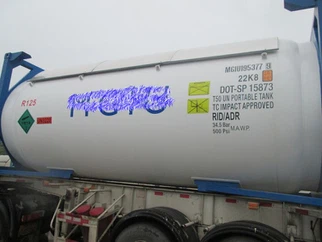

What is immersion cooling?
To explain in simple terms, immersion cooling is achieved by submerging the hardware (IT rack mounted equipment) in a non-conductive liquid (known as dielectric) to cool it rather than circulating cold air over or through it. The liquid is circulated through cool heat exchangers to maintain the low temperature.
In the pursuit of efficient heat management, especially in high - power - density applications like data centers, immersion cooling has emerged as a revolutionary solution. Among its variants, single - phase and two - phase immersion cooling techniques stand out, each with its own set of characteristics, advantages, and limitations.

Core Working Principle: A Fundamental Difference in Heat Transfer
Single Phase Immersion Cooling
In single - phase immersion cooling, the coolant remains in a single (usually liquid) state throughout the heat transfer process. Heat is transferred from the hot components (such as servers in a data center) to the coolant mainly through convection. There are two common ways to drive this convection: natural and forced.
Natural Convection: When the electronic components heat the surrounding coolant, the liquid near the components becomes warmer. Since warmer liquids are less dense than cooler ones, they rise. Cooler liquid from the periphery then moves in to replace the rising warmer liquid, creating a natural circulation loop. For example, in some low - power - density applications where simplicity is key, natural convection - based single - phase immersion cooling can be effective. However, the heat transfer rate in natural convection is relatively low as it depends solely on the density differences caused by temperature variations.
Forced Convection: To enhance the cooling capacity, a pump is often used in single - phase immersion systems. The pump forces the coolant to circulate more rapidly around the components. Cooler coolant is pushed towards the hot components, absorbs the heat, and then is directed to a heat exchanger. Here, the heat is transferred to a secondary cooling medium, typically water, and the cooled coolant is recirculated. This method can significantly increase the heat transfer coefficient compared to natural convection, making it suitable for applications with higher heat loads, like many modern data centers.

Two Phase Immersion Cooling
Two - phase immersion cooling harnesses the power of phase change to transfer heat. The coolant used in these systems has a relatively low boiling point. When the hot components heat the coolant, it reaches its boiling point and starts to vaporize. This phase change from liquid to vapor absorbs a large amount of heat, known as the latent heat of vaporization.
As the coolant vaporizes, the resulting vapor rises to the top of the enclosure. Here, it comes into contact with a condenser, which is usually cooled by a secondary coolant (such as water). The vapor condenses back into a liquid, releasing the latent heat it absorbed during vaporization. The condensed liquid then drains back to the bottom of the enclosure, where it can absorb more heat from the components, completing the cycle. The use of latent heat in two - phase immersion cooling allows for extremely high heat transfer rates, making it well - suited for applications with extremely high power densities, such as high - performance computing clusters and some advanced server setups in data centers.

System Structure & Complexity: Simplicity vs. Intricacy
The difference in working principles directly dictates the system architecture.
Single-Phase Systems: Have a relatively simple structure. Core components include the tank, circulation pump, heat exchanger (CDU), and an external dry cooler. It is a closed hydraulic loop system. Without the challenges of managing phase change and pressure, the system is more stable, and its design and maintenance are more straightforward.
Two-Phase Systems: Are more complex. They must include a precise condenser system to turn the vapor back into liquid. The entire tank must be hermetically sealed to manage internal pressure and vapor balance, requiring higher pressure ratings and sealing integrity, which increases design and manufacturing costs.
Performance & Efficiency: Different Strengths
Both are highly efficient thermal management solutions, but they excel in different areas.
Single-Phase Systems: Offer extremely stable and predictable cooling performance. Since the coolant has a high boiling point, it avoids local boiling. Heat transfer depends on the fluid's specific heat capacity and flow rate. By optimizing flow design and pump power, component temperatures can be precisely controlled above the dew point,completely eliminating the risk of condensation. This makes them ideal for scenarios demanding extreme temperature stability.
Two-Phase Systems: Excel at handling instantaneous, extreme heat fluxes over very short time periods. The phase change process absorbs significantly more energy (latent heat) than sensible heat, allowing it to rapidly remove "burst" heat from chips. Theoretically, they have an advantage in ultimate chip-level cooling limits. However, their system stability can be more susceptible to changes in ambient conditions (e.g., condenser water temperature).
Operations & Cost (OPEX): Key Considerations for Long-Term Use
Coolant Loss:
Single-Phase Systems: Experience virtually zero loss. The high boiling point coolant has very low volatility. It only requires an initial fill and periodic checks, resulting in very low operational costs.
Two-Phase Systems: Experience continuous minor losses. Although the tank is sealed, the low-boiling-point coolant readily evaporates and is lost during maintenance when the lid is opened. This requires periodic, expensive top-ups with specialized, high-cost fluid.
Maintenance Convenience:
Single-Phase Systems: Offer a clear advantage. Servers can be lifted directly out of the bath for maintenance, with minimal dripping. The fluid is easy to clean, and system components are often standard industrial parts, making maintenance less technically demanding.
Two-Phase Systems: Involve more cumbersome maintenance. Opening the tank leads to significant fluid evaporation, increasing cost and potential environmental concerns. System complexity also often requires more specialized technicians for servicing.
How to Choose?
| Feature | Single Phase Immersion Cooling | Two Phase Immersion Cooling |
|---|---|---|
| Working Principle | Uses liquid sensible heat, no phase change | Uses liquid latent heat, vaporization-condensation phase change |
| System Complexity | Low, simpler architecture, easier maintenance | High, requires condenser, high sealing requirements |
| Cooling Performance | Stable, controllable, predictable | Superior transient heat handling, better for thermal shock |
| Coolant Loss | Very Low/None, low OPEX | Continuous loss, high refill cost |
| Maintenance | Very convenient, servers are easy to service | Complex, maintenance leads to fluid loss |
| Ideal Application | Data centers, AI compute, edge computing, energy storage – large-scale deployment prioritizing stability, reliability, low TCO | Supercomputing, extreme HPC chips – niche frontier domains pursuing ultimate peak performance |
For the vast majority of enterprise customers seeking high reliability, low Total Cost of Ownership (TCO), and ease of large-scale deployment and daily operation, single-phase immersion cooling is the more mature, economical, and practical choice. It perfectly balances extreme cooling performance with industrial feasibility.
The JX Series Single-Phase Immersion Cooling Fluid, provided by our company, are built on this philosophy. Through innovative coolant formulation, we offer a turnkey, efficient, reliable, and worry-free green cooling solution to power your computing infrastructure into a new era.
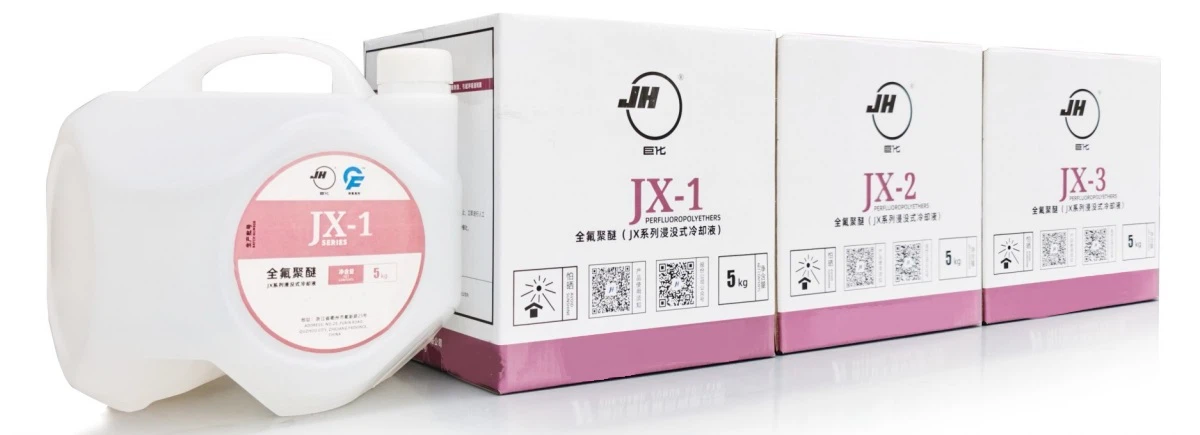
For businesses seeking single phase immersion cooling fluid , our company provides competitive pricing, reliable supply, and technical support. Contact us today for more details!
Our address
Room 1102, Unit C, Xinjing Center, No.25 Jiahe Road, Siming District, Xiamen, Fujan, China
Phone Number
+86-592-5803997
susan@xmjuda.com