

The Critical Role of aerosol propellants in Pulmonary Drug Delivery
The history of aerosol propellants in medical applications spans nearly a century, marked by significant technological advancements and regulatory milestones. From early chlorofluorocarbon (CFC) systems to modern hydrofluoroalkane (HFA) solutions, the evolution of aerosol spray propellant technology has revolutionized drug delivery for respiratory conditions. This article traces the development journey of aerosol propellant types, highlighting key innovations and their impact on patient care.
The CFC Era (1950s-1980s)
The first pressurized metered-dose inhalers (pMDIs) emerged in 1956, utilizing chlorofluorocarbon (CFC) propellants that revolutionized respiratory treatment. These early aerosol propellant types included:
-
First Generation Propellants
The initial aerosol propellants used in metered-dose inhalers (MDIs) were chlorofluorocarbons:
CFC-11 (Trichlorofluoromethane)
CFC-12 (Dichlorodifluoromethane)
CFC-114 (Dichlorotetrafluoroethane)
-

Technical Advantages and Clinical Impact
CFC-based aerosol propellants offered several groundbreaking benefits:
Consistent dosing reliability: Enabled precise medication delivery
Excellent chemical stability: Provided long shelf life for medications
Optimal particle size generation: Produced respirable particles (1-5 μm) ideal for lung deposition
During this period, landmark medications utilizing CFC propellants included:
Isoproterenol (1956)
Salbutamol (1969)
Beclomethasone dipropionate (1972)
The Environmental Awakening
By the 1970s, scientific research revealed CFCs' destructive impact on the ozone layer, culminating in:
1974 Molina-Rowland hypothesis identifying CFC-ozone depletion
1987 Montreal Protocol agreement to phase out ozone-depleting substances
Gradual implementation of CFC bans in medical applications
The Transition Period (1980s-1990s)
-
Environmental Concerns Emerge
Scientific discoveries revealed CFCs' ozone-depleting potential, leading to:
1987 Montreal Protocol agreement
Gradual phase-out of medical CFCs
Search for alternative aerosol propellants
-
Interim Solutions
The industry developed transitional aerosol spray propellant options:
Hydrochlorofluorocarbons (HCFCs)
Blended propellant systems
Early dry powder inhalers as alternatives
The HFA Revolution (1990s-Present)
-
Second Generation Propellants
Hydrofluoroalkanes became the new standard aerosol propellant gas types:
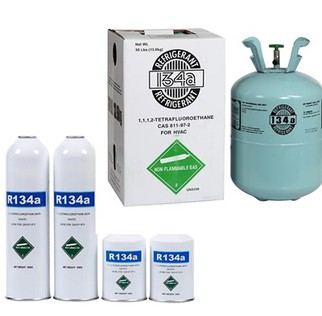
HFA-134a (1,1,1,2-Tetrafluoroethane,Norflurane)
HFA-227ea (1,1,1,2,3,3,3-Heptafluoropropane)
Advantages included:
Zero ozone depletion potential
Good safety profile for medical use
Compatibility with existing drug formulations
-
Modern Product Applications
Current aerosol propellants enable:
More efficient drug delivery to lungs
Improved environmental profile
Enhanced patient compliance
Reformulation Breakthroughs
The transition to HFA aerosol propellants required significant pharmaceutical innovation:
New surfactant systems (e.g., oleic acid, lecithin)
Ethanol as co-solvent for drug solubility
Modified valve and actuator designs
Landmark HFA-based medications included:
HFA-albuterol (1996)
HFA-fluticasone (2000)
HFA-budesonide (2001)
Emerging Technologies (2010s-Future)
Current research focuses on ultra-low GWP alternatives:
-
Next-Generation Propellants
HFA-152a (1,1-Difluoroethane)
GWP: 138 (90% reduction vs. HFA-134a)
Vapor pressure: 450 kPa at 20°C
Emerging clinical validation
HFO-1234ze (Trans-1,3,3,3-tetrafluoropropene)
GWP: <1
Currently in preclinical evaluation
Potential for future medical applications
-

Future Directions
Research focuses on:
Ultra-low global warming potential options
Biocompatible propellant alternatives
Precision delivery systems
Lessons from History, Vision for the Future
The evolution of medical aerosol propellants demonstrates the pharmaceutical industry's ability to overcome technical challenges while responding to environmental imperatives. From CFCs to HFAs and beyond, each transition has:
Maintained patient access to essential medications
Improved drug delivery efficiency
Reduced environmental impact
As the industry moves toward more sustainable solutions, the lessons learned from previous propellant transitions will prove invaluable. The ongoing development of next-generation aerosol propellants promises to deliver even more effective, environmentally responsible respiratory therapies for patients worldwide.