


The refrigerant industry is on the cusp of significant transformation between 2025 and 2030. With growing environmental concerns and the implementation of strict regulations, the landscape of refrigerants is evolving rapidly. The shift from HFCs refrigerants to natural refrigerants is becoming a global imperative, driven by the need to reduce the impact on climate change and protect the ozone layer.
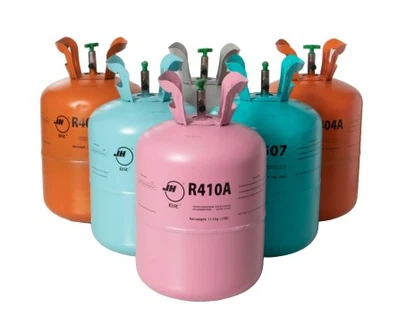
The Current Scenario of HFCs Refrigerants
Dominance in the Current Market
HFCs refrigerant have been the mainstream refrigerants in recent decades. They replaced chlorofluorocarbons (CFCs) and HCFCs hydrochlorofluorocarbons as a response to the ozone - depletion issue. HFCs gas have zero ozone - depletion potential (ODP), which was a major advantage. In the air - conditioning and refrigeration market, especially in residential and commercial air - conditioners, HFCs greenhouse gas like R32, R125, and R134a have been widely used. For example, R32 has become a popular choice in many air - conditioning systems due to its relatively high energy efficiency and lower global - warming potential (GWP) compared to some other HFCs refrigerants. Learn more about R32~
Looming Challenges for HFCs
However, HFCs refrigerant are now under scrutiny because of their high GWP. The GWP of some HFCs gas can be several thousand times that of carbon dioxide. For instance, R410A, a commonly used HFCs in air - conditioners, has a GWP of around 2088. In 2024, China, the world's largest producer and consumer of HFCs, officially entered the quota - production phase for HFCs in accordance with the Kigali Amendment to the Montreal Protocol. This amendment aims to phase down the production and consumption of HFCs globally. By 2029, China is required to cut HFC production by 10%, and by 2033, it will completely ban the sale of HFCs to non - party countries.
The Rise of Natural Refrigerants
Types and Their Advantages
Natural refrigerants, such as carbon dioxide (CO₂), propane (R290), and ammonia (NH₃), are emerging as strong alternatives to HFCs refrigerants.
Carbon Dioxide (CO₂): CO₂ has a GWP of 1, which is extremely low compared to HFCs gas. It is also non - flammable and non - toxic. In commercial refrigeration systems, especially in large - scale cold storage and supermarket refrigeration, CO₂ is increasingly being used. For example, some European supermarkets have adopted CO₂ - based refrigeration systems to reduce their carbon footprint.
Propane (R290): R290 has a GWP of only 3. It is a natural hydrocarbon refrigerant with excellent thermal properties. In the air - conditioning sector, although its flammability (classified as A3) poses some challenges, with proper safety measures, it is being used in small - scale applications. In 2022, the revision of the IEC 60335 - 2 - 40 ED7 standard increased the upper limit of the R290 charging amount for split - type air - conditioners from 334 grams to 988 grams, which is expected to boost its use in the household market.
Ammonia (NH₃): Ammonia has a very low GWP and is an efficient refrigerant. It has been widely used in industrial refrigeration for a long time, such as in large - scale food - processing plants. However, its toxicity and pungent odor require strict safety protocols in handling.
Barriers to Widespread Adoption
Despite their environmental advantages, natural refrigerants face some obstacles. The flammability of R290 requires special safety designs in equipment, which may increase the initial cost. CO₂ systems need to operate at high pressures, which demands more robust and expensive equipment. In addition, the infrastructure for the production, distribution, and servicing of natural - refrigerant - based systems is not as developed as that for HFCs hydrofluorocarbons.
Market Trends and Projections
Changes in Market Share
In the coming years, the market share of HFCs is expected to decline steadily. In 2025, the global production quota of HFCs is set at 79.19 million tons (in CO₂ equivalent), with a slight increase of 4.63 million tons compared to 2024, mainly due to the increased quota of R32. However, as the phase - down schedule of the Kigali Amendment progresses, this number will decrease significantly. On the other hand, the market share of natural refrigerants is projected to grow. By 2030, it is estimated that natural refrigerants could account for a substantial portion of the new - installation market, especially in regions with strict environmental regulations.
Impact on Different Sectors
Residential Air - Conditioning: In the residential air - conditioning sector, which accounts for a large portion of refrigerant demand, the shift to natural refrigerants will be a gradual process. R32 may still be dominant in the short - term due to its current wide - spread use and relatively good energy - efficiency. However, as technology improves and safety concerns are addressed, R290 is likely to gain more market share.
Commercial Refrigeration: Commercial refrigeration, including supermarkets and cold - storage facilities, is more likely to adopt CO₂ - based systems. These systems can achieve better energy - efficiency in large - scale applications, and the long - term cost savings can offset the higher initial investment.
Automotive Air - Conditioning: In the automotive air - conditioning market, new low - GWP refrigerants are being explored. HFOs (hydrofluoroolefins) are also in the running, but natural refrigerants like CO₂ are also being considered for their environmental benefits.
Technological Developments Facilitating the Transition
Safety and Efficiency Improvements
For natural refrigerants, research is focused on improving safety and efficiency. In the case of R290(click me for more R290 information), new safety - control technologies are being developed, such as better leak - detection systems and improved ventilation designs. For CO₂ systems, advancements in heat - exchanger technology are aimed at reducing the system's high - pressure requirements and improving overall efficiency.
New Product Designs
Manufacturers are also designing new products specifically for natural refrigerants. Some air - conditioner manufacturers are developing R290 - compatible units with enhanced safety features. In the commercial refrigeration sector, companies are designing integrated CO₂ - based refrigeration systems that are more compact and easier to install.
Conclusion
The period between 2025 and 2030 will witness a significant shift in the global refrigerant market from HFCs refrigerants to natural refrigerants. The driving forces behind this transition are mainly environmental regulations and the pursuit of a more sustainable future. Although HFCs will still be present in the market, their influence will wane. Natural refrigerants, with their outstanding environmental credentials, will gradually take over, but only if the current barriers to their adoption can be overcome through technological innovation and infrastructure development. The refrigerant industry is at a crossroads, and the choices made in the next few years will have a profound impact on the global environment and the future of the refrigeration and air - conditioning sectors.

One-stop refrigerant gas Factory in China
Send your inquiry about HFCs Refrigerants or Natural Refrigerants to us !


