



Lithium-ion batteries are now widely used in electric vehicles (EVs), battery energy storage systems (BESS), data centers, consumer electronics, and industrial backup power systems. However, with the rapid growth of battery installations, lithium battery fire incidents have also increased significantly.
Traditional fire suppression methods are often ineffective against lithium-ion battery fires because of thermal runaway, toxic gas release, and the risk of re-ignition. As a result, many industries are actively searching for the best fire suppression agent for lithium battery fires.
This article explains why lithium battery fires are difficult to extinguish, compares common extinguishing technologies, and explores why F500 fire suppression agent has become a preferred solution for many industrial and commercial applications.
Why Lithium Battery Fires Are Difficult to Extinguish
Unlike ordinary combustible fires, lithium-ion battery fires involve a complex electrochemical reaction. Once thermal runaway begins, the battery can generate its own oxygen and continue burning even after visible flames are suppressed.
Common challenges include:
Rapid thermal runaway propagation
Extremely high temperatures
Toxic and flammable gas release
Re-ignition after extinguishment
Difficulty cooling battery cells internally
These characteristics make conventional firefighting foam or dry powder less effective for large battery systems.
Industries such as EV manufacturing, energy storage, mining, marine transportation, and data centers now require specialized lithium battery fire suppression solutions.
What Causes Thermal Runaway in Lithium Batteries?
Thermal runaway occurs when a battery cell overheats uncontrollably, triggering a chain reaction inside neighboring cells.
Common causes include:

Mechanical damage

Overcharging
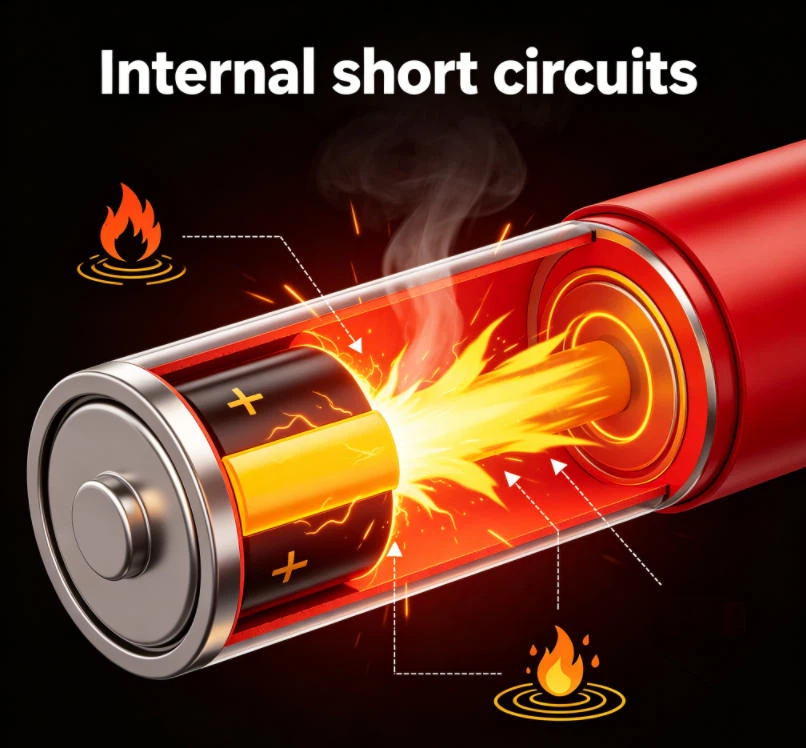
Internal short circuits

Manufacturing defects

High ambient temperatures

Improper battery management systems (BMS)
Once thermal runaway starts, temperatures can exceed 1,000°C, creating intense fire and explosion hazards.
For this reason, effective battery fire suppression must focus on:
1. Rapid cooling
2. Heat absorption
3. Preventing fire spread
4. Reducing re-ignition risk
Best Fire Suppression Agents for Lithium Battery Fires
Several fire suppression technologies are currently used in the market. Each has advantages and limitations depending on the application.
1. Water-Based Fire Suppression
Water remains one of the most effective cooling agents for lithium-ion battery fires because it absorbs heat efficiently.
Advantages
Excellent cooling performance
Helps prevent thermal runaway propagation
Widely available
Cost-effective
Limitations
Large water consumption
Potential electrical hazards
Water runoff contamination
Limited penetration into battery modules
Water alone may suppress flames temporarily, but it often struggles to stop internal cell reactions.
2. Dry Powder Extinguishers
Dry chemical extinguishers are commonly used for small fires.
Advantages
Fast flame knockdown
Portable and easy to deploy
Limitations
Poor cooling capability
Cannot stop thermal runaway
High re-ignition risk
Residue contamination
Dry powder is generally considered unsuitable for large-scale ESS or EV battery fires.
3. Clean Agent Fire Suppression Systems
Clean agents such as FK-5-1-12 and FM200 are widely used in data centers and electrical rooms.
Advantages
No residue
Safe for sensitive electronics
Fast discharge systems
Limitations for Lithium Battery Fires
Limited cooling effect
Cannot sufficiently suppress thermal runaway
Reduced effectiveness for large battery packs
Clean agents are useful for protecting surrounding equipment but are often insufficient as the primary suppression method for lithium-ion battery fires.
4. F500 Fire Suppression Agent
F500 encapsulator agent has gained increasing attention as an advanced lithium battery fire suppression solution.
F500 is a water additive technology designed to improve cooling efficiency and suppress thermal runaway more effectively than water alone.
Why F500 Is Considered One of the Best Fire Suppression Agents for Lithium Battery Fires
Competitive advantage
Rapid Heat Reduction
The primary objective in lithium battery fire suppression is cooling.
F500 reduces water surface tension, allowing water to penetrate deeper into battery cells and absorb heat more efficiently.
This helps slow or stop thermal runaway propagation.
01
Encapsulation Technology
F500 uses encapsulation technology to surround fuel molecules and reduce vapor release.
This mechanism helps:
Reduce flammable gas generation
Lower explosion risk
Minimize toxic vapor emissions
02
Improved Re-Ignition Prevention
One of the biggest challenges in battery fires is re-ignition.
F500 helps maintain lower battery temperatures for longer periods, reducing the chance of secondary ignition after visible flames are extinguished.
03
Reduced Water Usage
Compared with traditional firefighting methods, F500 can improve cooling efficiency while using less water.
This is especially valuable for:
Battery energy storage systems (BESS)
Underground mining operations
Marine battery installations
Electric vehicle fire response
04
PFAS-Free Firefighting Solution
As environmental regulations become stricter worldwide, many industries are moving away from traditional AFFF foam because of PFAS concerns.
F500 is widely recognized as a PFAS-free fire suppression alternative suitable for environmentally conscious projects.
05
F500 vs Traditional Firefighting Foam for Lithium Battery Fires
| Feature | F500 | Traditional AFFF Foam |
|---|---|---|
| Cooling Capability | Excellent | Moderate |
| Thermal Runaway Suppression | Strong | Weak |
| Re-Ignition Prevention | Better | Limited |
| PFAS-Free | Yes | Often No |
| Lithium Battery Application | Highly Suitable | Limited |
| Toxic Vapor Reduction | Yes | Minimal |
For lithium-ion battery fire scenarios, cooling performance is far more important than simple flame suppression. This is why many engineers now prefer specialized battery fire suppression agents instead of conventional firefighting foams.
Applications of F500 Fire Suppression Systems
F500 is increasingly used in:
Battery Energy Storage Systems (BESS)
Large-scale ESS containers require effective thermal runaway suppression to comply with modern fire safety standards such as UL9540A and NFPA 855.
Electric Vehicle (EV) Fire Protection
Fire departments and emergency response teams are adopting F500 solutions for electric vehicle battery fires because of improved cooling performance.
Data Centers with Battery Backup Systems
UPS battery rooms and backup power systems present unique fire risks that require advanced suppression technologies.
Marine and Offshore Energy Systems
Battery-powered vessels and offshore platforms require compact and environmentally friendly fire suppression solutions.
How to Choose the Right Lithium Battery Fire Suppression Agent
When selecting a fire suppression solution for lithium battery applications, buyers should evaluate:
Cooling efficiency
Thermal runaway suppression capability
Re-ignition prevention
Environmental compliance
PFAS-free certification
System compatibility
Maintenance requirements
Total lifecycle cost
For many industrial applications, F500 fire suppression agent provides a balanced combination of cooling performance, environmental safety, and operational efficiency.
Future Trends in Lithium Battery Fire Protection
As global demand for lithium-ion batteries continues growing, fire protection standards are also evolving rapidly.
Key industry trends include:
Increased adoption of PFAS-free firefighting agents
Stronger ESS fire safety regulations
Greater focus on thermal runaway mitigation
Integration of intelligent fire detection systems
Expansion of EV battery fire suppression technologies
Manufacturers, EPC contractors, and fire protection engineers are now prioritizing advanced suppression technologies specifically designed for lithium battery hazards.
Conclusion
Lithium-ion battery fires present unique challenges that traditional firefighting methods cannot fully address. Effective suppression requires rapid cooling, thermal runaway control, and re-ignition prevention.
Among current technologies, F500 fire suppression agent has emerged as one of the most effective solutions for lithium battery fire protection because of its enhanced cooling capability, encapsulation technology, and PFAS-free formulation.
As EVs, BESS systems, and battery-powered industrial equipment continue expanding worldwide, advanced lithium battery fire suppression solutions will become increasingly important for industrial safety and regulatory compliance.
Looking for a Reliable Lithium Battery Fire Suppression Solution?
As lithium-ion battery applications continue expanding across EVs, BESS containers, data centers, and industrial energy systems, choosing the right fire suppression agent is becoming increasingly critical for operational safety and regulatory compliance.
We supply advanced F500 fire suppression solutions designed for:
Lithium-ion battery fire protection
Thermal runaway suppression
Battery energy storage systems (BESS)
Electric vehicle (EV) fire response
Industrial and marine fire safety applications
Request A Quote Or Technical Consultation
Contact us today to receive:
Product specifications
Technical data sheets (TDS/MSDS)
Pricing information
Application recommendations
OEM and distributor cooperation details
Start improving your lithium battery fire protection strategy with a professional fire suppression solution tailored to modern energy storage risks.


