
Immersion Cooling vs Direct-to-Chip Cooling: Which One Fits Your Data Center?

As AI workloads, HPC clusters, and high-density servers continue to push thermal limits, traditional air cooling is no longer sufficient. Liquid cooling has rapidly moved from an emerging option to a mainstream infrastructure decision.
Among all liquid cooling technologies, immersion cooling and direct-to-chip (DTC) cooling are the two most widely adopted approaches. However, choosing between them is not simply a technical preference - it directly impacts your capital investment, operational efficiency, and long-term scalability.
This guide breaks down the real differences to help engineering teams, data center operators, and procurement managers make an informed decision.
Quick Comparison: Immersion vs Direct-to-Chip
| Factor | Immersion Cooling | Direct-to-Chip Cooling |
|---|---|---|
| Cooling Method | Entire server submerged in fluid | Liquid circulated to CPUs/GPUs |
| Heat Removal Efficiency | Very high (uniform cooling) | Extremely high (localized hotspots) |
| Typical Rack Density | 100kW+ supported | 30–80kW typical |
| CAPEX (Initial Cost) | High | Medium |
| Retrofit Difficulty | Very high | Low to moderate |
| Maintenance | Low frequency | Moderate |
| Fluid Requirement | Specialized dielectric fluids | Water / glycol-based liquids |
| Best Fit | New builds, ultra-high density AI | Existing data center upgrades |
What Is Immersion Cooling?
Immersion cooling involves submerging servers and IT components directly into a non-conductive dielectric fluid. Heat generated by components is absorbed by the liquid and then transferred through a heat exchange system.
Key Advantages
Uniform cooling across all components
Eliminates airflow constraints
Supports extremely high-density deployments
Reduces need for traditional HVAC systems.
Limitations
High upfront infrastructure cost
Requires specialized hardware compatibility
Complex to retrofit into existing facilities
In practice, immersion cooling is often selected for AI training clusters, crypto mining, and next-generation data centers where density and efficiency are top priorities.
What Is Direct-to-Chip Cooling?
Direct-to-chip cooling (also known as cold plate cooling) delivers liquid coolant directly to high-heat components such as CPUs and GPUs through cold plates.
Key Advantages
Highly efficient heat removal at chip level
Easier integration into existing server architecture
Lower initial investment compared to immersion
Compatible with hybrid air/liquid environments.
Limitations
Does not cool all components (memory, VRMs still rely on air)
More complex piping and maintenance
Thermal performance depends on system design
DTC is widely used in enterprise data centers transitioning from air cooling to liquid cooling.
Immersion vs Direct-to-Chip: Key Differences Explained
1. Cooling Efficiency
Immersion cooling provides full-system thermal management, eliminating hotspots entirely.
DTC focuses on targeted cooling, which is highly efficient but limited to key components.
If your workload involves extreme thermal density, immersion typically delivers better overall stability.
2. Deployment Complexity
Immersion requires new infrastructure design
DTC can be retrofitted into existing racks
For most legacy facilities, DTC is significantly easier to implement.
3. Cost Considerations (CAPEX vs OPEX)
Immersion Cooling
Higher initial investment
Lower long-term energy and cooling costs
Direct-to-Chip
Lower upfront cost
Moderate operational savings
Decision often depends on whether you optimize for short-term budget or long-term efficiency.
4. Scalability and Future Readiness
Immersion cooling is designed for:
100kW per rack
Future AI workloads
Maximum density environments
DTC is better suited for:
Gradual upgrades
Mixed infrastructure
Medium-density deployments
Which Cooling Solution Is Better?
The answer depends on your deployment scenario.
Choose Immersion Cooling if:
You are building a new AI or hyperscale data center
You require ultra-high rack density (>100kW)
Long-term energy efficiency is a priority
Choose Direct-to-Chip Cooling if:
You are upgrading an existing facility
You want a lower initial investment
You need a flexible and phased deployment approach
How to Choose the Right Cooling Fluid
Regardless of the cooling method, fluid selection plays a critical role in system performance and reliability.
Key considerations include:
Thermal conductivity
Electrical insulation (for immersion)
Material compatibility
Environmental impact
Long-term stability
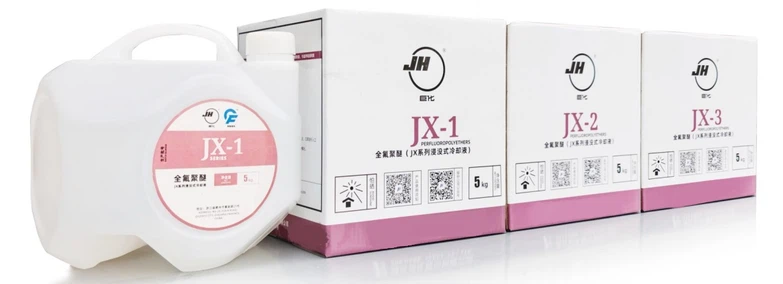
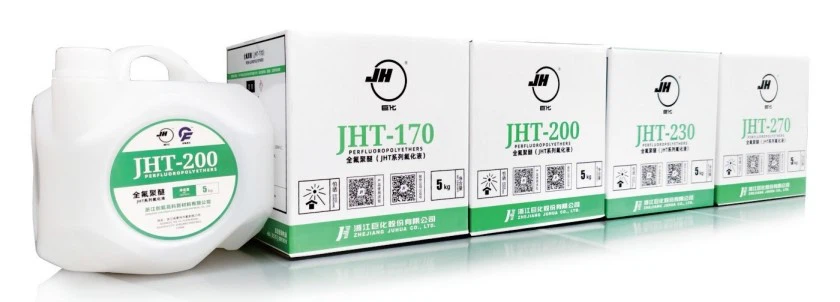
For immersion systems, high-purity dielectric fluids are essential to ensure safe and stable operation.
For DTC systems, coolant consistency and corrosion resistance are equally important.
Is immersion cooling better than direct-to-chip?
Not universally. Immersion is better for high-density and new builds, while DTC is more practical for upgrading existing systems.
Which cooling is used in AI data centers?
Both are used. Hyperscale AI facilities increasingly adopt immersion, while many enterprise AI deployments use DTC.
Which solution is more cost-effective?
DTC has lower upfront costs, but immersion can offer better long-term efficiency depending on scale.