



Why PTFE Emulsion Is Indispensable for AI Server High-Speed PCB Manufacturing
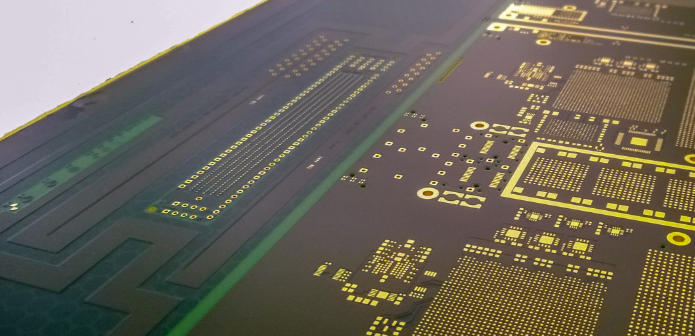
Global AI computing infrastructure is undergoing an unprecedented bandwidth upgrade. Data transmission speeds between GPUs, orthogonal backplanes, and optical modules have advanced rapidly from 112Gbps to 224Gbps, with 448Gbps PAM4 interfaces becoming the standard for Rubin Ultra and GB300 AI server platforms. Traditional hydrocarbon resin (M8/M9) and FR-4 PCB substrates hit hard physical limits at frequencies above 30GHz, generating severe signal attenuation, jitter, and thermal drift that degrade AI cluster stability.
Polytetrafluoroethylene (PTFE) delivers industry-leading ultra-low dielectric constant (Dk 2.0–2.1) and dissipation factor (Df 0.0001–0.0005), making it the only commercially viable dielectric material compliant with Nvidia M10 ultra-low loss material specifications. While many buyers confuse PTFE powder and PTFE emulsion for PCB manufacturing, electronic-grade PTFE aqueous dispersion (PTFE emulsion) stands as the dominant industrial feedstock for mass production of AI server high-speed copper clad laminates (CCL) and prepregs, accounting for over 80% of PTFE substrate raw material consumption in the high-frequency electronics sector.
PTFE emulsion is a stabilized aqueous suspension of nano-sized PTFE particles (100–500nm) with solid content ranging from 40% to 60%, engineered specifically for continuous fiberglass cloth impregnation lines-the mainstream process for multi-layer AI backplane prepreg manufacturing. Dry PTFE powder relies on dry mixing and compression molding, which cannot support large-scale, uniform coating of ultra-thin 106/1080 electronic glass or quartz cloth, creating unresolvable mass-production bottlenecks for high-speed AI PCBs.
Most importantly, PTFE emulsion enables homogeneous dielectric layer distribution. When blended with nano ceramic fillers (SiO₂, BN) and viscosity modifiers, the liquid dispersion fully penetrates every filament of woven fiberglass during dip impregnation. After staged baking and high-temperature sintering, it forms a void-free continuous PTFE matrix locked to glass fibers. This uniform structure ensures consistent Dk/Df values across prepreg sheets, eliminating impedance mismatch issues that cause eye diagram closure and transmission errors on 40–80 layer AI orthogonal backplanes.
PTFE Emulsion VS PTFE Powder: Industrial Differences for CCL & Prepreg Production
A common misconception in the high-frequency PCB industry is that PTFE powder and PTFE emulsion are interchangeable for AI server substrate production. In fact, their application scenarios, production efficiency, and final board performance differ drastically, defining their unique roles in the AI hardware supply chain.
PTFE emulsion serves as the primary raw material for mass-produced M10 ultra-low loss prepreg and copper clad laminates. It supports continuous roll-to-roll industrial manufacturing, which is adopted by top-tier CCL manufacturers for automated 24/7 production. The controllable resin loading (300–400g/m²) delivers consistent prepreg thickness, a core requirement for precise multi-layer stack-up design in high-density GPU interconnect substrates. Additionally, emulsion-based composite laminates effectively solve pure PTFE's inherent defects, including high thermal expansion, poor copper foil adhesion, and soft texture, greatly improving PCB dimensional stability during repeated high-temperature reflow cycles.

In contrast, dry PTFE fine powder is limited to small-batch, compression-molded dielectric sheets, mainly used for military radar and niche millimeter-wave devices, rather than mainstream AI server PCBs. Dry powder blending easily causes filler agglomeration and micro air pockets, leading to unstable dielectric performance that cannot meet 224G/448Gbps high-speed signal transmission standards. It is only used as an auxiliary additive in individual emulsion formulas to enhance film compactness, never as the main raw material for mass AI PCB production.
Contact Us for More PTFE Details
Complete Workflow of Making M10 Ultra-Low Loss PCB Prepreg With PTFE Emulsion
Understanding the industrial workflow of PTFE emulsion-based prepreg production helps hardware engineers and procurement specialists recognize the unique value of electronic-grade PTFE aqueous dispersion in AI server PCB manufacturing. The standardized mass-production process strictly complies with M10 material specifications:
First is formulation mixing. High-purity, PFOA-free electronic grade PTFE emulsion is compounded with surface-modified ceramic fillers, eco-friendly surfactants, and water-based thickeners to adjust viscosity and precisely tune Dk/Df parameters, matching the ultra-low loss requirements of 448Gbps high-speed backplanes.
Second is fiberglass impregnation. Ultra-thin electronic glass cloth is fully soaked in the PTFE dispersion dip tank, achieving uniform and controlled absorption of the PTFE composite liquid, which lays the foundation for consistent dielectric performance of the final substrate.
Third is segmented thermal sintering. Multi-zone industrial ovens sequentially evaporate residual water, remove low-molecular additives, and fuse PTFE nanoparticles into a dense, continuous dielectric film tightly bonded to glass fibers, forming qualified semi-cured prepreg sheets.
The final steps are vacuum high-temperature lamination and PCB fabrication. Multiple prepreg layers are stacked with rolled copper foil and pressed under 370°C vacuum conditions to produce finished PTFE CCL panels. These panels are then processed through multi-layer lamination, laser micro-drilling, and circuit patterning to manufacture high-speed PCBs for AI server backplanes and GPU interconnection systems.
Key Electrical & Reliability Advantages of Emulsion-Based PTFE PCB
The widespread adoption of PTFE emulsion for AI server PCB materials stems from its unrivaled electrical performance and long-term operational reliability, which traditional FR-4 and M8/M9 hydrocarbon resin substrates cannot replicate.
First, it delivers ultra-stable low Dk/Df across the full GHz spectrum. Emulsion-sintered PTFE composite maintains a stable dielectric constant (Dk = 2.0–2.1) and ultra-low dissipation factor (Df < 0.0007) from 1GHz to 100GHz, with almost no performance drift under long-term 120°C high-temperature operation in server cabinets. Compared with M9 resin (Df ≈ 0.0015), it cuts high-frequency signal attenuation by more than 50%, effectively reducing signal jitter and transmission errors for 224G/448Gbps SerDes channels.
Second, it features near-zero moisture absorption. The fully sintered PTFE film has a water absorption rate of less than 0.01%, avoiding dielectric performance degradation caused by humidity in sealed server environments, ensuring long-term stable signal transmission of AI cluster hardware.
Third, it provides superior thermal endurance. With a continuous operating temperature of up to 260°C, the emulsion-based PTFE substrate withstands multiple lead-free reflow soldering cycles without softening, warpage, or layer delamination, meeting the high-reliability requirements of high-power AI server motherboards and backplanes.
Furthermore, the formula of PTFE emulsion can be flexibly adjusted to customize substrate CTE and dielectric properties, supporting targeted production for three core AI PCB scenarios: orthogonal high-speed backplanes, GPU interconnect carrier boards, and 1.6T/3.2T optical module substrates.
Market Demand Growth of PTFE Emulsion for AI Computing Infrastructure
The global boom in AI data center construction has driven explosive growth in demand for ultra-low loss PCB substrates, making electronic-grade PTFE emulsion one of the fastest-growing fluorochemical raw materials in the high-frequency electronics industry. Industry forecasts indicate that the global PTFE dispersion market for high-frequency CCL will maintain rapid growth through 2030, fully driven by the iteration of 224G/448Gbps AI server interconnection technology.
Leading cloud computing OEMs and hardware manufacturers have fully adopted Nvidia M10 ultra-low loss material standards, completely replacing traditional high-loss resin materials in core high-speed signal layers. For professional fluorochemical suppliers, PTFE emulsion is the core high-volume product for serving CCL mass manufacturers, while PTFE micro powder only serves as a supporting auxiliary material and niche military substrate raw material.
As AI clusters continue to upgrade bandwidth and expand deployment, the market demand for high-purity, low-metal-ion, PFOA-free PTFE emulsion will keep rising, bringing long-term stable order opportunities for qualified suppliers in the industrial supply chain.
Conclusion: PTFE Emulsion Becomes Standard Material for 448Gbps AI PCB
The upgrade of AI server interconnection from 112Gbps to 224Gbps and 448Gbps has completely broken the performance limit of traditional high-speed PCB substrates. As the only mass-producible raw material for M10 ultra-low loss prepreg and copper clad laminates, electronic-grade PTFE aqueous emulsion has become an irreplaceable core material for next-generation AI server high-speed backplanes and GPU interconnect PCBs.
Different from PTFE powder which is limited to small-batch special scenarios, PTFE emulsion supports large-scale, continuous, and standardized industrial production, with uniform dielectric performance, excellent thermal stability, and customizable formula advantages. For PCB and CCL manufacturers pursuing high-reliability ultra-high-speed signal transmission, high-quality PTFE emulsion has become the standard configuration for new-generation AI computing hardware substrate production.
With the continuous expansion of global AI computing infrastructure, PTFE emulsion will further penetrate the high-frequency PCB market, becoming the key incremental track for fluorochemical material suppliers in the electronics industry.

One-stop high-purity fluorochemicals to power your entire AI manufacturing chain.
We supply one-stop fluorochemical solutions for the AI industry: electronic-grade PTFE emulsion for high-speed AI server PCBs, PFPE cooling fluids for data center thermal management, and electronic-grade hydrofluoric acid for precision AI component cleaning.


